
In large-scale ecommerce, it’s easy to assume that visibility equals success.
If a category holds thousands of products, surely the goal is to make sure shoppers can see them all … right?
Not quite.
The truth is that most products on a larger retail site are never seen by most shoppers.
And that’s not a problem to fix – it’s a reality to design for.
Attention is the real scarce resource
Even the most determined browser rarely looks beyond the first hundred or so products.
After that, curiosity fades, options blur together, and scrolling becomes mechanical.
The shopper moves on, applies filters, or leaves.
No amount of infinite scroll can create infinite attention.
Exposure happens elsewhere
Paid campaigns (such as Google Shopping, Meta, Affiliates) already distribute exposure across the catalogue. Each ad is its own entry point, showing the right product to the right shopper at the right time.
That’s how the long tail of inventory gets surfaced.
Once a shopper lands on your site, the job isn’t to show everything; it’s to convert their intent into a purchase.

Where the real value lies
What matters most is how you use the limited attention a visitor gives you.
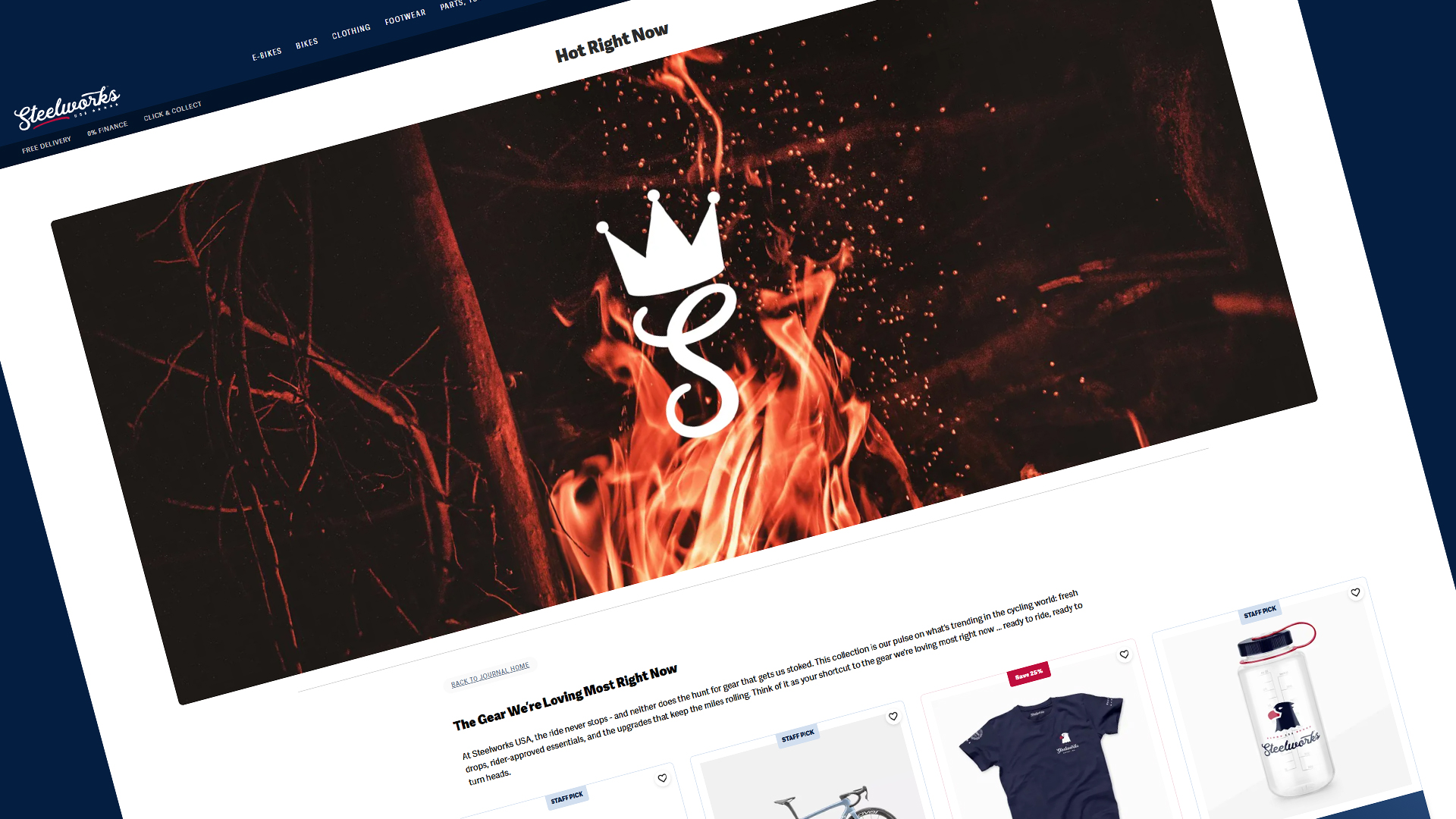
Good merchandising (strong hero imagery, curated collections, and clear signposts) makes that attention count.
That’s why features such as Automatic Landing Pages (ALPs) and Collections exist:
they concentrate focus where it drives results.
ALPs simplify huge categories into guided starting points.
Collections mix storytelling and curation to inspire purchase.
Both help shoppers find something meaningful quickly … and that’s what converts.
The visibility curve you can’t escape
In every large catalogue, impressions follow a steep curve:
- A small handful of top products capture most views and sales
- The rest form a long tail that receives only occasional traffic
- Infinite scroll can stretch the curve slightly but never flatten it
Accepting this truth frees you to focus effort where it pays back.

The smarter approach …
Stop trying to make everything visible. Start making the visible things matter.
Invest in:
- Great merchandising for high-value ranges and hero SKUs
- Story-led Collections that connect products to shopper intent
- ALPs that turn overwhelming choice into simple, guided journeys
When the experience feels clear, confident and curated, shoppers spend longer, engage more deeply and buy more readily.
The Takeaway
- Most products won’t be seen (and that’s fine)
- What matters is that the right products are seen by the right people, in the right way
- That’s what good ecommerce design – and your Cloud POS Ecommerce platform – is built to help you achieve

Showcase your products in a whole new way, with Collections!
Collections give you the freedom to design pages that do more than display products. They create experiences. By combining imagery and videos with text and curated product ranges, you can turn everyday listings into inspiring, purposeful destinations…
Check out our Collections webinar
October 17th 2025 | 3:00pm BST
References & Evidence Appendix
User-behaviour research
Baymard Institute (2024) – Ecommerce Search & Category Navigation benchmarks: over 80 % of product interactions occur within the first 60–120 items viewed.
Nielsen Norman Group (2022) – Infinite Scrolling Is Not for Every Website: engagement drops sharply after a few screenfuls; infinite scroll “encourages aimless exploration but lowers decision efficiency.”
CXL / Hotjar Heatmap Studies – ~70 % of clicks occur above the fold or within the first two scroll loads.
Choice overload
Iyengar & Lepper (2000) – “When Choice Is Demotivating,” Journal of Personality and Social Psychology 79(6): extensive choice reduces purchase likelihood by nearly 90 %.
Baymard Institute – Large, non-curated lists increase abandonment and delay decisions.
Mobile consumption
Statista / SimilarWeb (2023–24) – 70–80 % of ecommerce traffic originates on mobile, where fewer items fit per screen, compounding drop-off.
Visibility distribution
Algolia Ecommerce Search Benchmark (2023) – 88 % of product clicks occur within the first two “viewports.”
Adobe Commerce Insights (2022) – Roughly 5 % of catalog items generate 85 % of on-site search impressions.
Design recommendations
NN/g and Baymard both advocate curated overview or landing pages for large categories (essentially the Automatic Landing Page model) to reduce overwhelm and guide exploration.
Independent UX and analytics studies consistently confirm that shoppers view only a small fraction of large catalogues. Curation, guidance, and storytelling outperform endless scrolling for both user satisfaction and conversion.