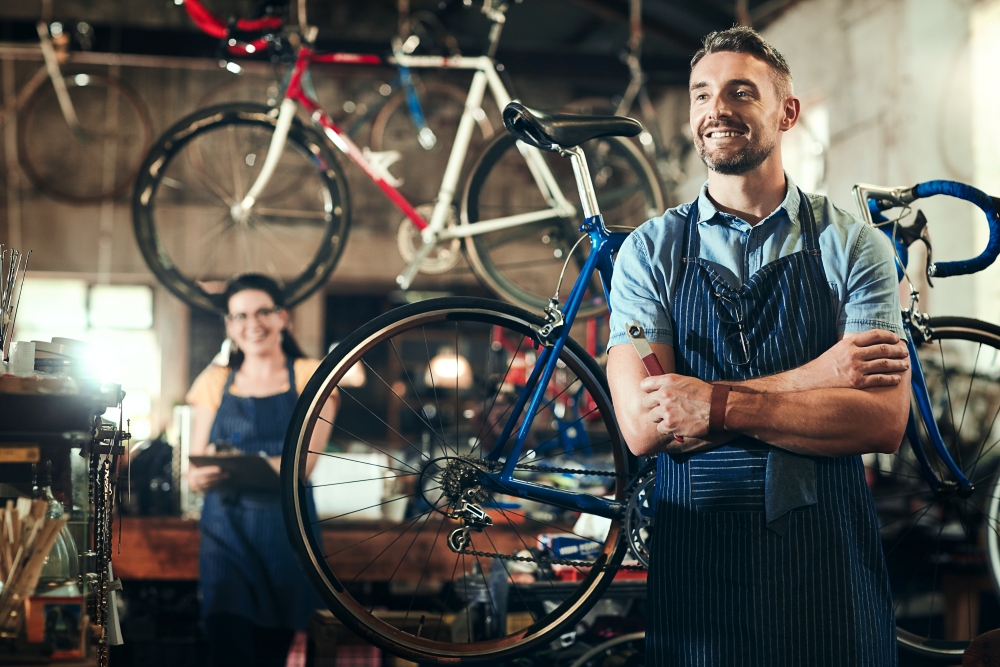
Whether you run a local bike shop that’s been in the family for three generations, or you’ve recently turned your passion for mountain biking into a business, there are certain things all independent bike dealers have in common. One of the most obvious? You need customers to find you.
In a recent article we explored how the typical cycling customer is changing, and what this means for bike retailers. In short, it looks like more of a certain kind of customer, new types of customers entirely, and evolving customer journeys. Tomorrow, when someone in your local area wakes up and decides they want to buy a bike, they’re picking up a phone and searching online long before they even think about heading out the door.
And so, you need to make sure you show up in the right ways. Appear in searches, include the right information about location and opening times (and keep it up to date). Have a website that’s functional, user-friendly, representative of your actual inventory, and loaded up with delivery or collection options that help customers make it over the line.
It sounds obvious, and it seems simple, but the numbers suggest many independent bike shops are still struggling to get it right when it comes to joining up their in-store and online experiences. According to data from PeopleForBikes, ecommerce makes up just 9.1% of YTD revenue (as of June 2026), with the top 25% of shops capturing 85% of online sales.
That’s concrete proof it’s not an even playing field out there. Something is going wrong for 75% of local bike shops with an online presence.
The customer you never knew you lost
What got you behind the counter of your bike shop? In almost all cases it’s a love of cycling, and that’s what makes a local bike shop special. Chain stores and Amazon can’t compete on the depth of knowledge and genuine enthusiasm that’s poured into an independent store.
Getting your shop found in the first place is one of the biggest hurdles you’re facing. If you’re buried deep in the search results, a customer with money burning a hole in their pocket is walking straight into the open arms of a competitor. You’ll never even know it happened, but you’ll feel the lost revenue (turns out you can miss what you never had).
Make sure you’re taking these steps to show up in search results:
- Set up a Google Business Profile
- Use Google Merchant Centre to list your products on Google Shopping
- Check location details and current opening hours are correct
- Ensure your website is set up for search engines to read
- Add SEO-optimized content to make sure you appear for popular search terms
- Or find a retail management solution that offers all the above plus digital marketing services
The customer who can’t find what they want
Let’s say the customer does manage to land on your site; can they find what they want when they get there? Whether they’re ultimately planning to order online or just checking what stock you hold before they pop in, if they don’t see what they’re looking for – and fast – you’re not likely to keep them around.
A well-maintained ecommerce website with a clean design, smart navigation, product categories and correct stock listings wins every time. That all comes with a certain amount of admin (that a busy owner-operator can rarely fit into the workday) which is why it so often slips. Look for bike shop software that links your store inventory to your website, so you don’t have to worry about consolidating numbers. Some even offer automatic supplier integration – so as you check goods in, they’re added to your website with no manual intervention.
You may also want to consider sorting items into collections to aid decision-making, and get extra products in front of customers browsing online. Helpful content on landing pages, such as buying guides can help to set your site apart.
The customer who wants to collect
Does your shop offer Click & Collect services? Increasingly, customers want the option to buy their item online, before visiting the store to pick it up (especially for a big or bulky item that may be expensive to ship).
If they’ve made it all the way from discovering your site in their web search, to finding the exact product they wanted, being able to tell it’s in stock and adding it to their basket, you don’t want to fall at the last hurdle.
For customers who’d rather pick up their item in person, it’s a risk to check the stock online and arrive hoping it hasn’t sold in the time it took for them to get there (a wasted journey is not the experience you hope for from an independent bike retailer). Don’t underestimate how many customers prefer to carry out transactions online, without having to telephone a store and ask for something to be reserved. It’s one more point of differentiation for your bike shop website, and one less customer lost.
A quick mention to payment options and shipping services – two more places where the conversion can be fumbled. You’ll want to make sure to support a range of payment options to increase the chances of securing the sale.
The customer who keeps coming back
Independent bike shops win on in-store experience. Right? So why focus time and money on ecommerce, when you can be building relationships with loyal customers on the shop floor. The two sides of the business don’t have to be (and shouldn’t be) mutually exclusive. Building trust with a customer used to start when they walked through the door, but today it starts so much earlier.
What they find online when they go looking for their next new bike holds weight. A shop that’s easy to find, shows them what they need to know, and makes it easy to take the next step is already telling the customer something about what it’s like to deal with you. That first impression, formed on a phone screen before they’ve ever spoken to anyone, shapes whether they show up at all, and whether they come back after they do.
First impressions matter. Meeting the customer with the right information, and a connected experience at every step, ultimately determines if they’ll shop with you again, be it online or in-store. And once they do visit, you get the chance to offer what only an independent retailer can.
Ready to run a better-connected bike shop?
If you’re exploring connecting your online and in-store experiences to better meet your customers’ needs, get in touch to find out how Citrus-Lime can help.
Contact us
Normal UK & US Office Hours Mon – Fri: 8.30am to 5.30pm
FAQs
What ecommerce features should a bike shop website have?
At a minimum, a bike shop website needs to show accurate, up-to-date inventory with clear pricing and an obvious way to buy or reserve. Beyond that, the features that make the most difference are the ones that remove friction: Click & Collect, a range of payment options, and product listings that reflect what’s actually on the floor rather than what was in stock six months ago. Bike shop software that connects your point of sale directly to your ecommerce means your website updates automatically as stock moves, without anyone having to maintain it manually.
What is the best bike shop software for managing online and in-store sales together?
The best bike shop software for managing both channels is one that runs them from the same place rather than treating them as separate operations. When your point of sale and your ecommerce share the same inventory data, what’s on the floor is what’s on the website, orders from either channel update stock in real time, and you’re not spending time reconciling two sets of numbers. Citrus-Lime is built specifically for independent specialist retailers and connects point of sale, inventory management and ecommerce in a single platform.
How do I get my bike shop to show up in local search results?
The starting point is a complete and accurate Google Business Profile with current opening hours, your address, and up-to-date contact details. Beyond that, your website needs to be readable by search engines and contain content that matches what local customers are searching for. Listing your products on Google Shopping via Google Merchant Centre puts your inventory in front of customers who are actively searching for what you sell. Some bike shop management platforms like Citrus-Lime include digital marketing services that handle this on your behalf, so you’re not managing it separately from the rest of your operation.
Can bike shop software automatically sync inventory to my website?
Yes. Bike shop software that integrates directly with your ecommerce means your website inventory updates in real time as sales are made and stock is received, without manual intervention. Some platforms go further: Citrus-Lime’s AutoSIM feature pulls product data directly from supplier catalogues, so when you take in new stock, product listings including descriptions, images and specifications are added to your website automatically. That removes one of the biggest barriers to keeping an independent bike shop’s website current and shoppable.
What should I look for in bike shop point of sale software?
For an independent bike retailer, the most important thing a point of sale system can do is connect the different parts of the business rather than adding another data silo. That means inventory that’s visible across your sales floor and your website, purchasing data that informs your buying decisions, and reporting that shows you how the business is actually performing. Workshop management, supplier integration and ecommerce in the same system means your team is working from one source of truth rather than cross-referencing multiple platforms.